
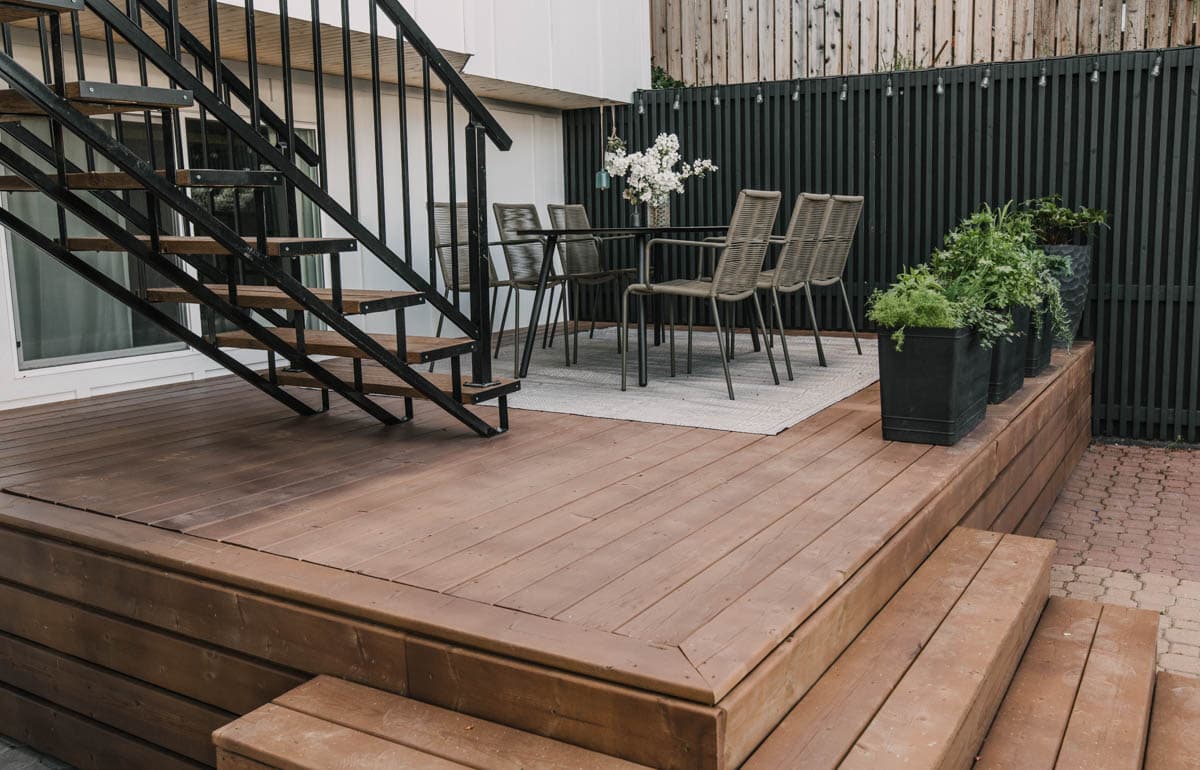
Deck & Fence Staining in North Bay
Protect your outdoor living spaces from extreme UV degradation and brutal freeze-thaw cycles. We engineer durable, weather-resistant finishes for decks, fences, and docks.
The Physics of Exterior Wood Prep
Slapping a new coat of stain over old, graying wood guarantees premature failure. We execute a strict three-phase restoration process to ensure maximum molecular adhesion.
Chemical Stripping & Cleaning
We apply specialized wood cleaners and brighteners to dissolve failing acrylics, extract deep-set mold, and neutralize tannins. This restores the wood to its natural, neutral pH state.
Regulated Power Washing
High-pressure blasting destroys wood fibers. We utilize low-pressure, high-volume washing to safely flush out the chemical strippers and dead cellular material without causing severe splintering or surface furring.
Moisture Testing & Application
Wood must drop below 15% moisture content before staining. We physically meter the boards before applying deep-penetrating alkyd oils or high-build acrylic solid stains for maximum UV defense.
Deck & Fence Staining FAQ
How much does deck staining cost in North Bay?
Pricing depends entirely on the square footage of the floorboards, the complexity of the spindles/railings, and the current state of the wood. A deck requiring heavy chemical stripping will cost more than a raw, new-build deck. Review our pricing guide for baseline estimates.
Do you stain exterior siding and log homes?
Yes. We apply protective exterior stains to cedar shake, wood siding, and log cabins throughout the Nipissing district. You can learn more about our broader surface capabilities on our exterior painters page.
How long do I need to wait to stain a newly built deck?
Pressure-treated lumber available in North Bay hardware stores is highly saturated with chemical preservatives and water. You must wait a minimum of 3 to 6 months for the wood to naturally weather and dry out before it can successfully absorb a stain.
Can I just paint my deck instead of staining it?
Standard exterior house paint should never be applied to horizontal walking surfaces. Paint forms a rigid film that traps rising moisture from the ground below, leading to rapid peeling and catastrophic failure within a single winter. You must use a dedicated solid deck stain if you want an opaque, paint-like appearance.